Bright HealthCare
Bright HealthCare

Prior Authorization Portal

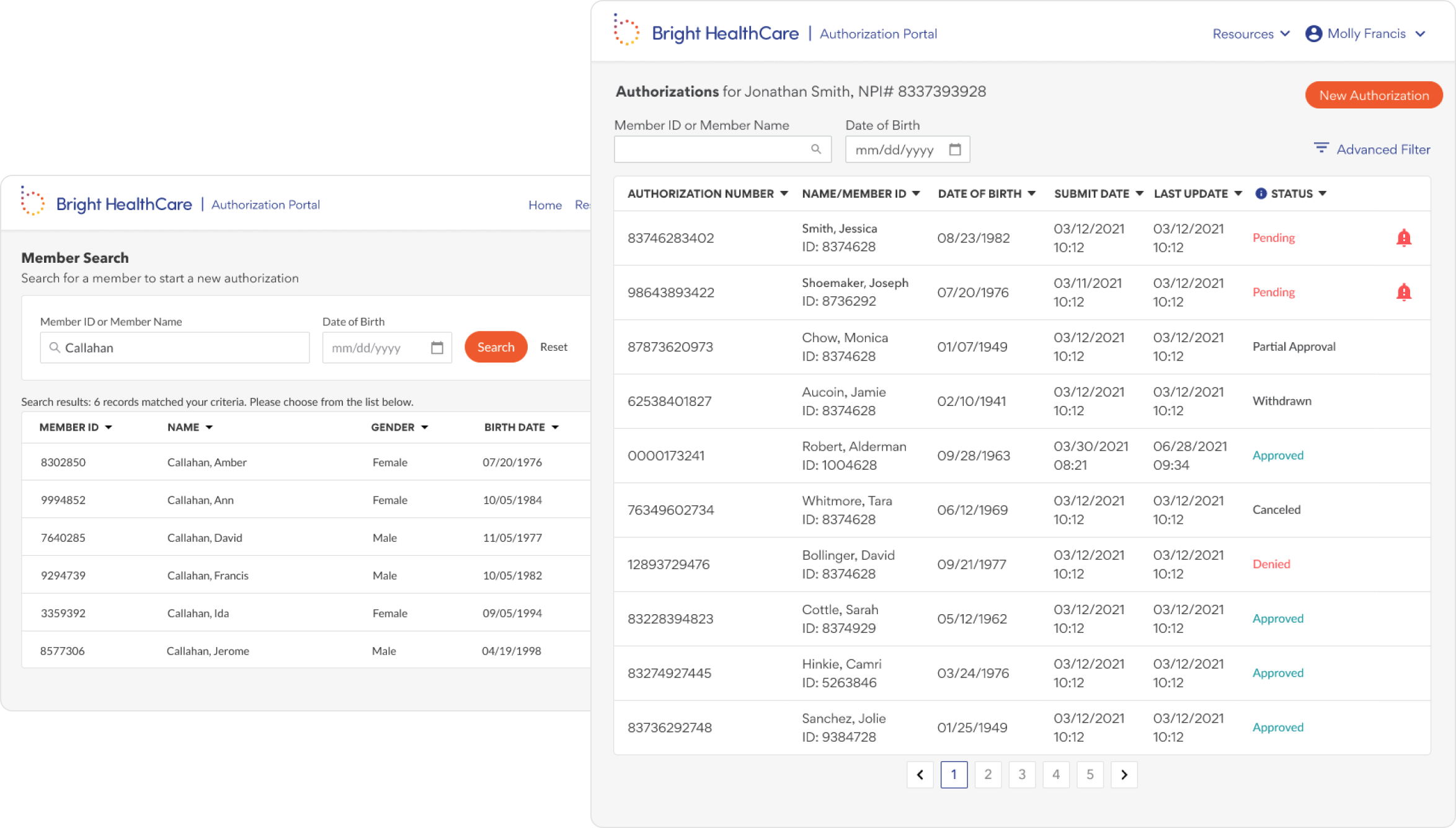
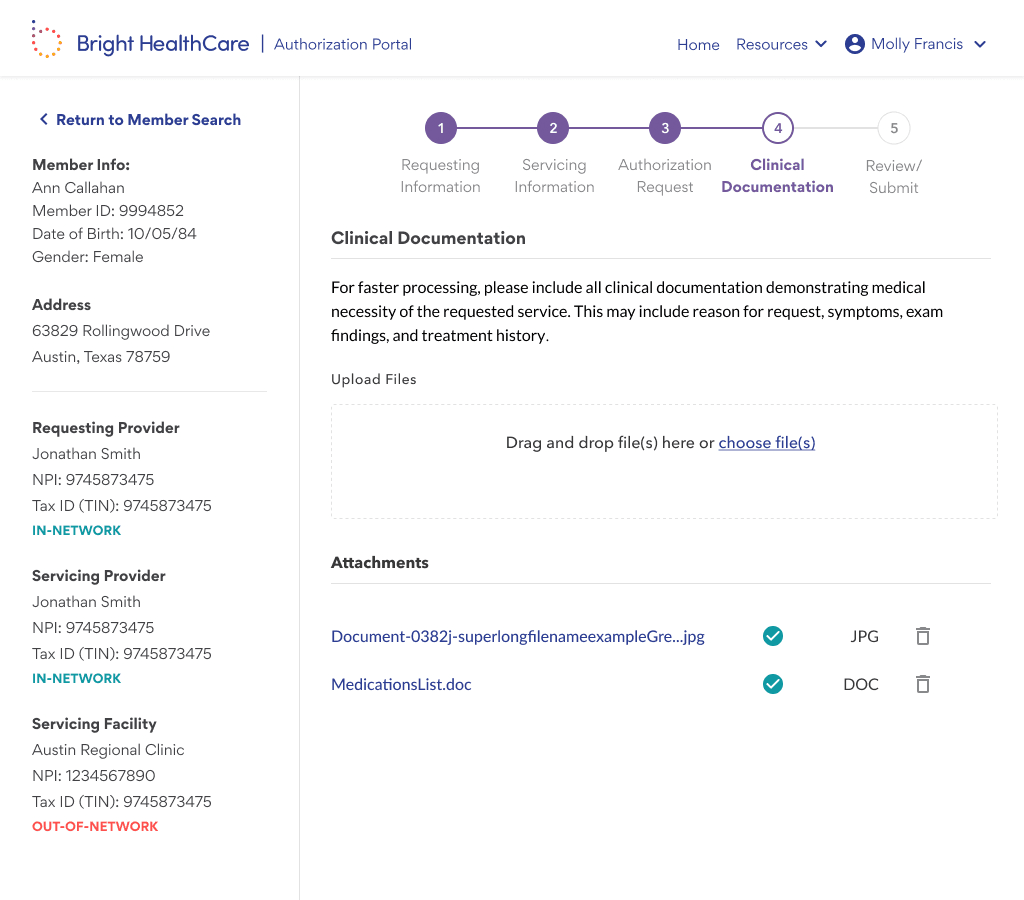
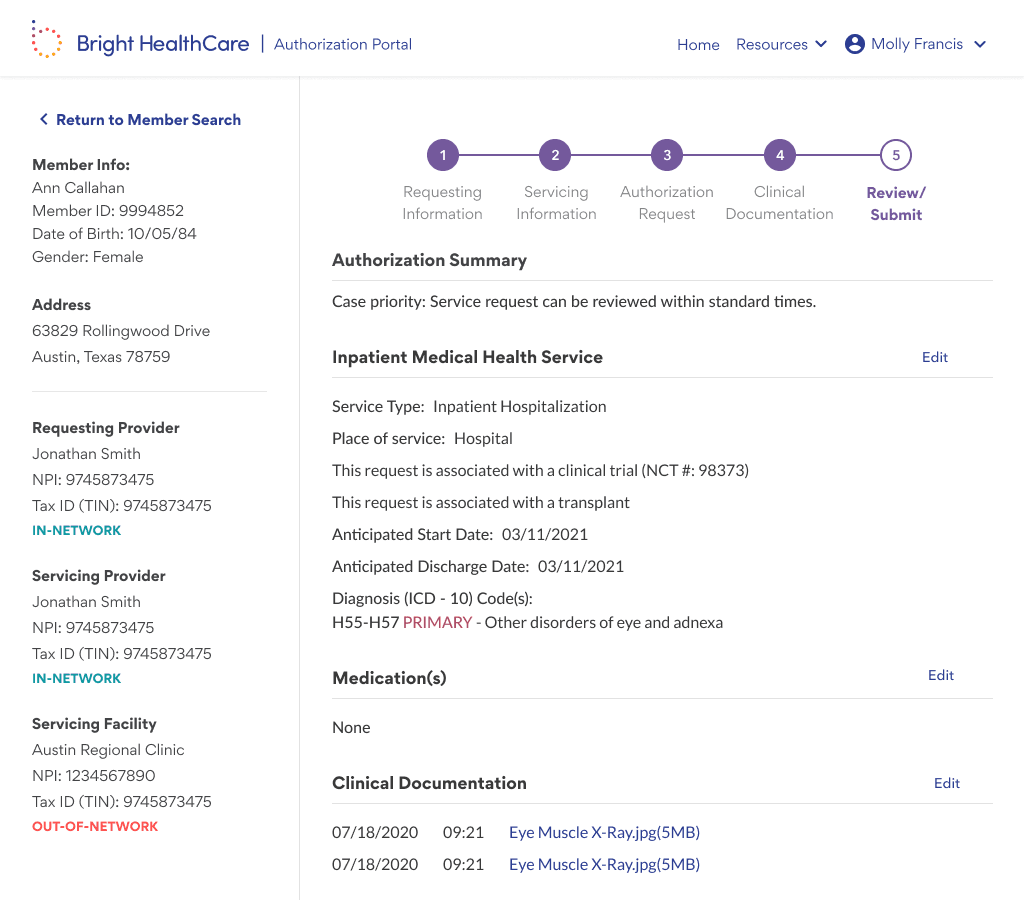
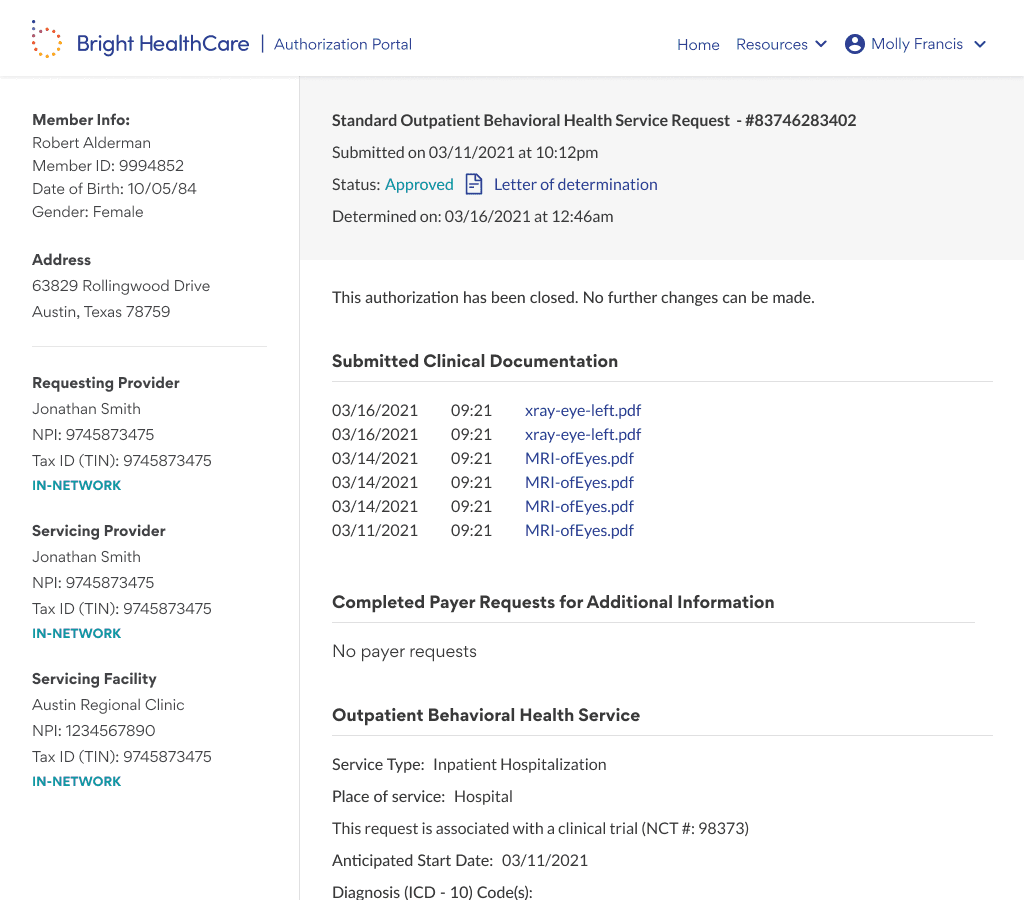
Enables providers to electronically submit prior authorization requests and view all requests and their statuses

Member search and authorizations dashboard in the Authorization Portal

Every prior authorization started with a fax.

Across five markets — Texas, Georgia, Utah, California, Virginia — fax was the only way in. No validation, no real-time data, no status once a request left the desk. Processing stretched up to a month, and internal teams spent hours turning unstructured faxes into actionable records.

Provider overwhelmed by fax paperwork

Faxing in the world of digital experiences can cause providers and their staff added work, frustration, loss of trust in the company, and more importantly time away from caring for members.
So we asked the people sending them.

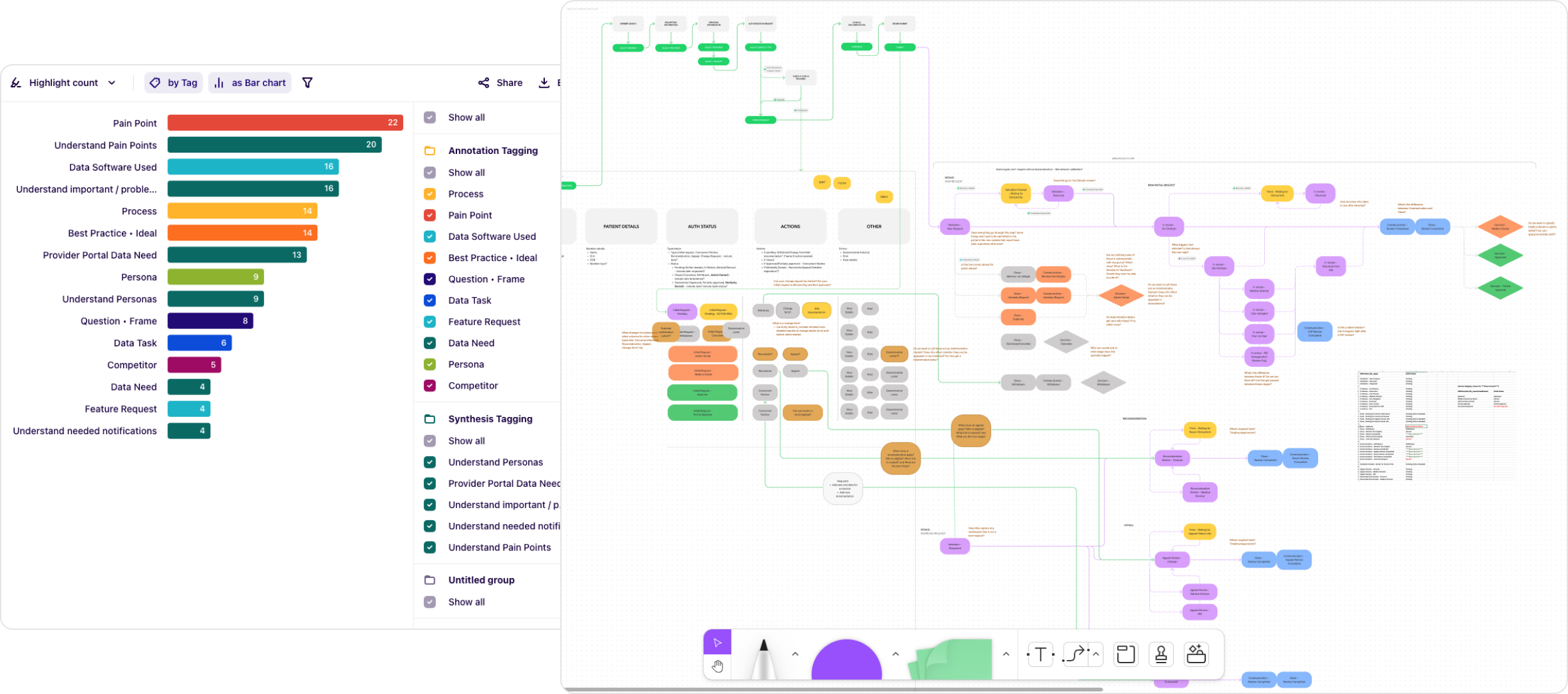
Provider interviews on how authorizations actually got done, then usability testing on the digital submission flow to find where it still caught. Both synthesized into empathy maps.

A fax is one flat page. A portal needs a structure.

So I drew the shape of it: what belongs on the dashboard, what belongs inside a request, and what a provider needs to see after they hit submit. Authorization rules came out of clinical ops’ heads and became the form’s own logic.

Status got a place of its own — the one thing a fax could never give back. And the patterns that came out of it were reusable, so the next Bright surface started from a structure instead of a blank page.

Interview tagging highlight counts and authorization workflow mapping board

They weren't asking for software. They were asking for an answer.

What providers wanted was narrow and specific, and almost none of it was about a better form.

😟 Pains

  • Burnout from repetitive admin tasks.
  • No visibility into status or timelines.
  • Endless back-and-forth with payers.
  • Delays hurting patient satisfaction and care.

🌟 Gains

  • One system, fully integrated with their EHR.
  • Clear approval requirements—less rework.
  • Automated status updates and notifications.
  • Faster turnarounds, more time for patient care.
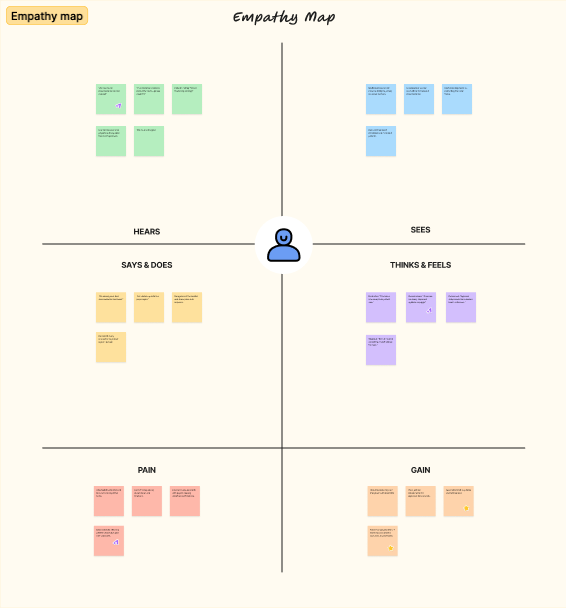
Empathy map for providers using the portal

The hard part wasn't the form. It was the rules behind it.

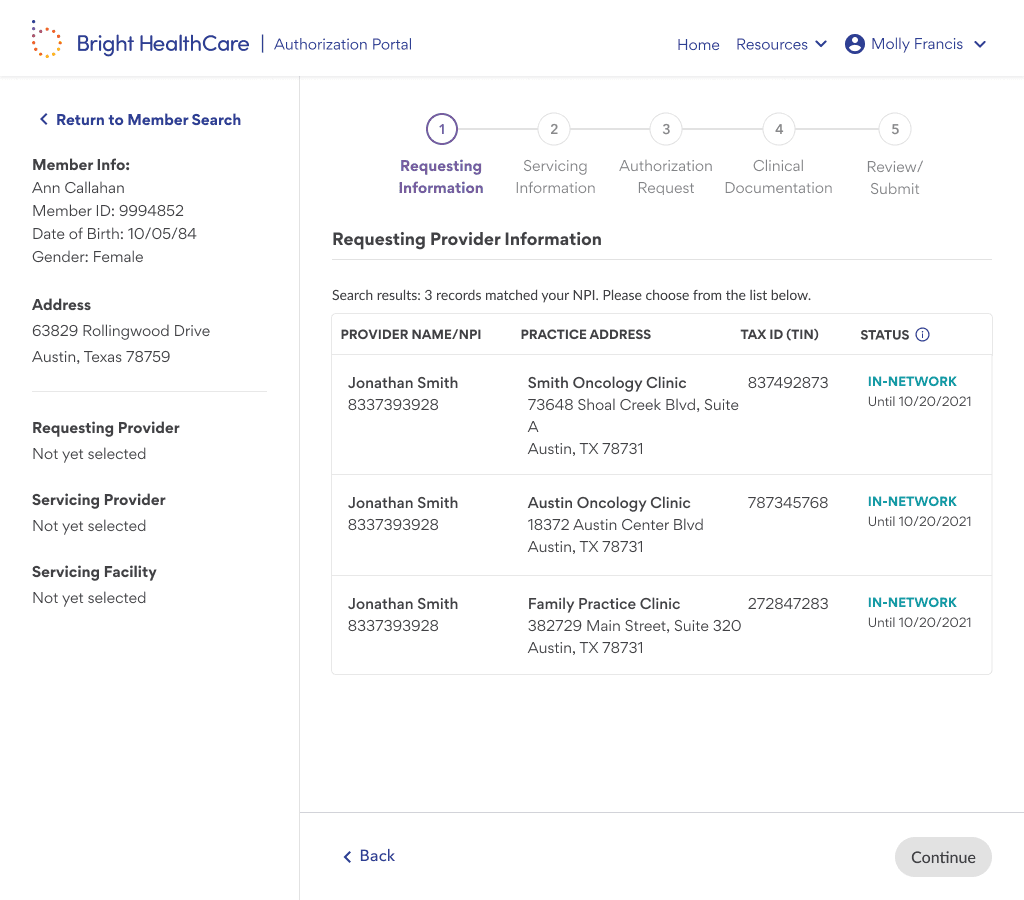
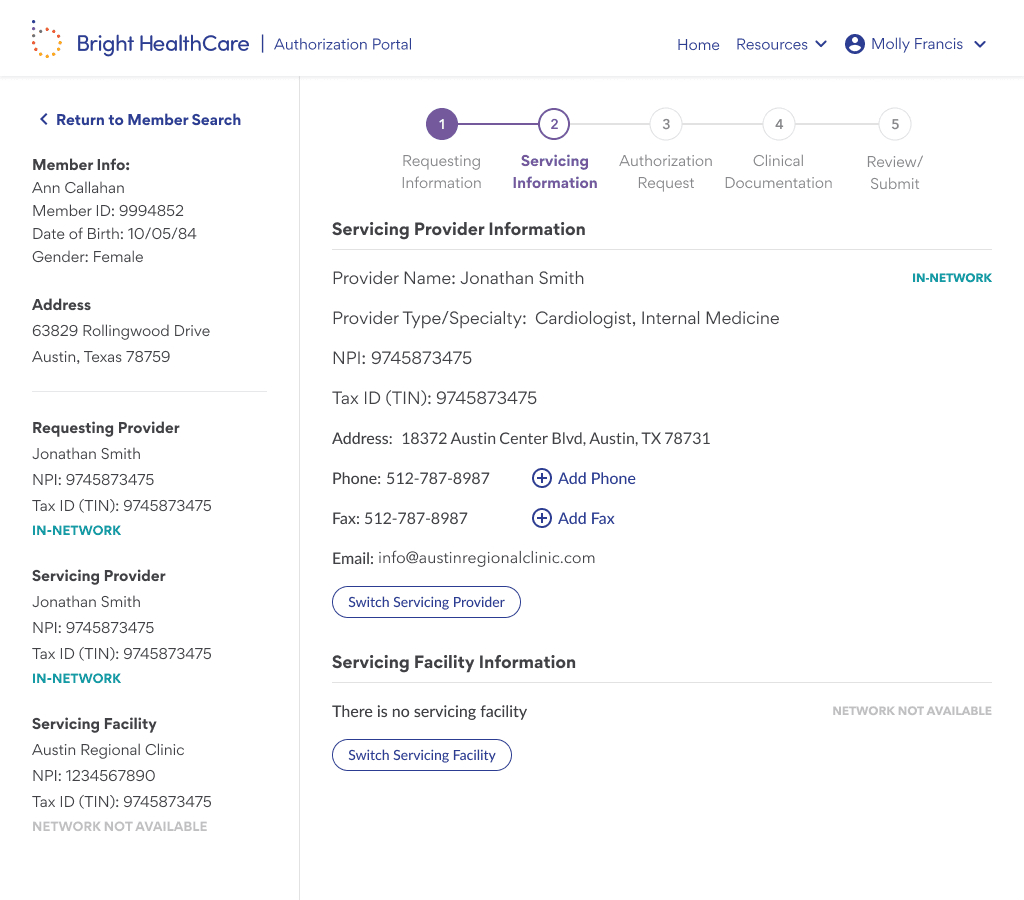
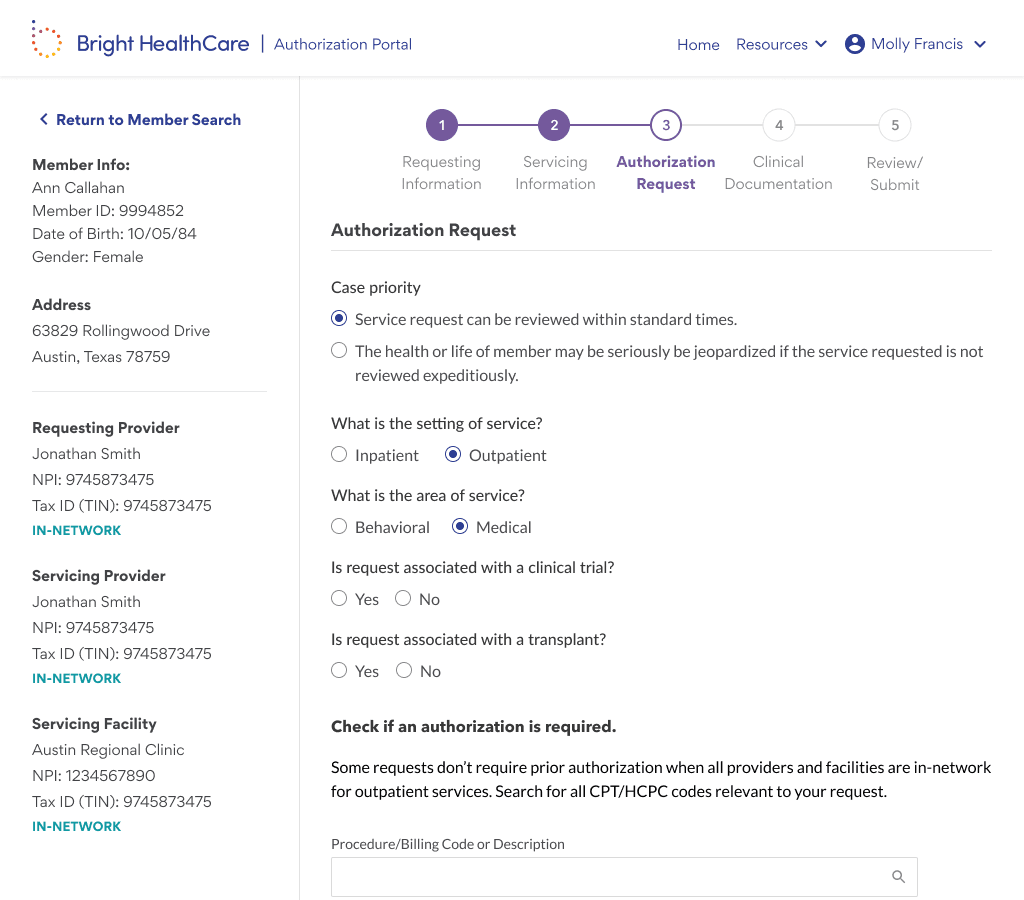
I mapped authorization rules into form logic with clinical operations, so the portal could tell a provider what was required before they submitted rather than after. Continuous prototype testing tightened every step of the flow, and an empty-state dashboard grew with the user.

Step 1 — Requesting information, provider search

One system. Five markets. White-label from the start.

I partnered with the broader team on a scalable design system with white-labeling support, shipping patterns the team could reuse across other Bright surfaces.

You have Marie Kondo’dthe authorization portal!

Rebecca Schweitz
VP, Clinical Performance

Clinician using the authorization portal on a laptop

It replaced the fax machine.

Within weeks of go-live in a new market, 15%+ of authorizations had moved to the portal. Providers rated it the best tool they'd used — one team put the saving at four hours per provider, per day.

Savings

$1.9m in savings

Scaled monthly usage to 9-10K a month

Clinical review

$800K in savings

7 minutes per case for clinicians reviewing cases

Time saved

4 Hours per day saved

Went down 4 minutes per authorization, per provider

Users

50K authorization submissions

22K providers logged in

The Team

  • Worked with 5–7 engineers, 1 Product Manager, Director of Product, and 1 Content
  • Hired and managed 1 designer midway
  • Worked with clinical teams to understand their workflows and competitors they have used

Timing

  • March – July 2021

    6 months

Tools Used

  • Figma
  • Jira
  • Confluence
  • Miro
  • Pendo
  • Dovetail

Live Figma prototype

Open prototype ↗

Up next — DocSquad

DocSquad

Virtual Care Telehealth